
Howard County VINE Coverage
Howard County sends its Inmate Lookup users straight to VINE. The Howard County corrections page points you there. Maryland DPSCS names VINE the statewide victim information and notification service. Searches and registration work around the clock. The data behind it comes from participating agencies, so updates arrive on their own timing. VINE covers a named person in current custody. Call it a status tool, not a roster. The county detention center holds pretrial and presentenced adults along with some sentenced ones. State prison beds sit under Maryland DOC. People move between those stages. So read the facility and status fields rather than trusting a name alone.
Check Howard Arrests on VINELink
One person per search. Maryland's VINE brochure supports a name search and an offender identification number search. Exact spelling helps. When several people share a name, compare every identifier the screen provides before settling on a record.
- Open VINELink and select Maryland.
- Choose the person or offender search option.
- Enter the full name, or use an available offender ID.
- Review all returned identifiers and the listed facility.
- Open the correct record and note the status and update context.
- Call the facility when the matter is urgent or the result conflicts with known facts.
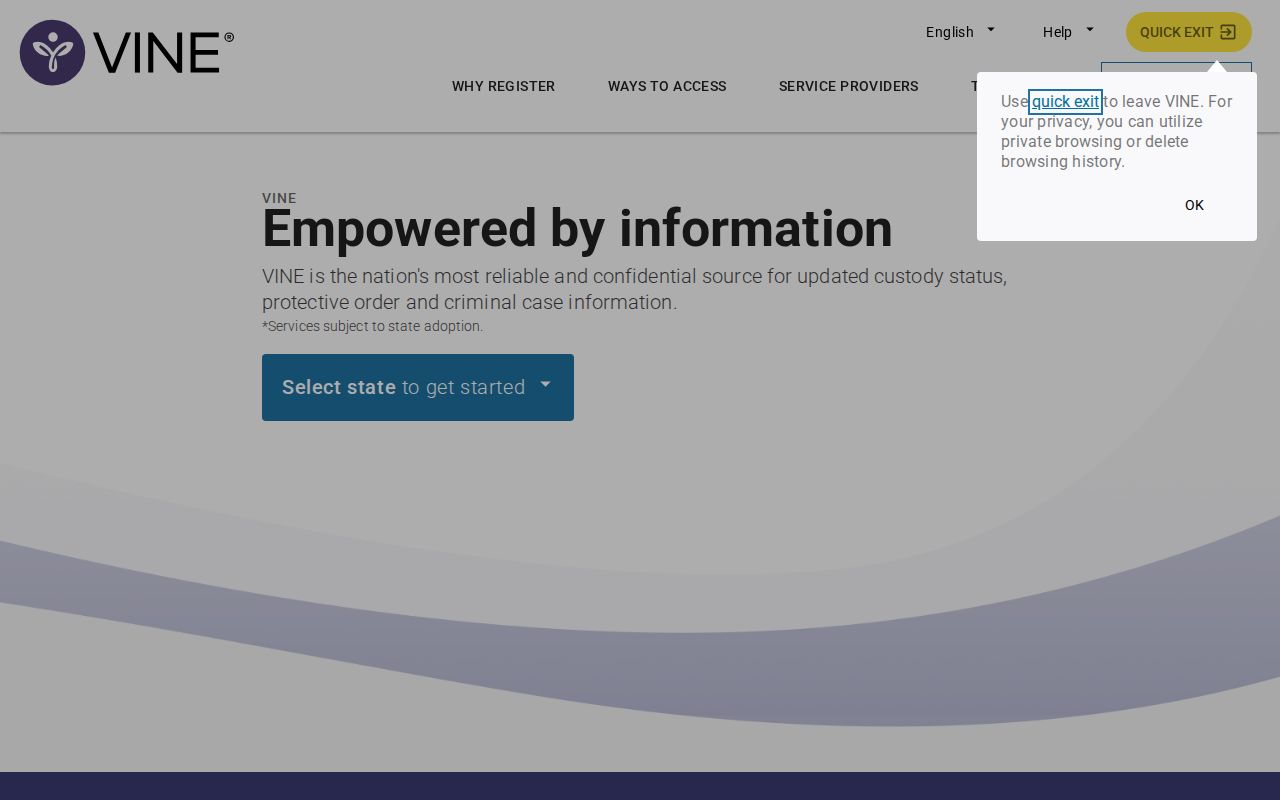
The Howard County recent-arrests hub breaks down how a VINE result differs from the intake record and the court docket. Custody can shift, so note your search time. The VINELink page presents a plain, blank lookup screen.
Howard VINE Result Fields
VINE builds each record around status and notification. Agencies and interface states can change what appears on screen, but a few core fields stay constant.
| Item | How to use it |
|---|---|
| Name and identifying data | Compare carefully when several people share a name. |
| Offender ID | Use the number to narrow later searches when supplied. |
| Custody status | Read as a status at the time of the agency update, not a court result. |
| Facility or location | Shows the reported holding site and may change after transfer. |
| Notification options | Registration may be offered for release, transfer, escape, or other custody events. |
| Not promised | VINE is not a full arrest feed, court disposition source, or public photo service. |
"Custody" means the listed authority holds the person. "Transfer" signals a change of location or responsibility. "Disposition" is the court outcome, and Maryland Case Search is where that answer lives.
Register Howard Custody Alerts
Once the right record is confirmed, registration can send notices by phone, email, or text, wherever the interface offers those choices. Maryland's brochure lists release, transfer, and escape notifications. Signing up costs nothing. Treat it as a safety aid, never a promise of instant notice.
- Open the matched person's VINE record.
- Select the registration or notification option.
- Choose a supported phone, text, or email channel.
- Enter accurate contact details in the secure VINE interface.
- Create and remember the requested PIN for phone confirmation.
- Complete verification and keep the registration details private.
The PIN confirms you received an automated phone notice. Skip codes someone could guess. Update your contact details whenever they change. VINE itself tells users to keep a personal safety plan rather than lean on alerts alone, and the official VINE service handles the registration.
Howard VINE Limits and Verification
A new Central Booking event rarely appears instantly. Intake, VINE transmission, and court entry are separate processes. A blank result can also mean release, a move, or different identifying details. It can also mean juvenile or sealed records, or another agency's custody. No match does not mean no arrest. For urgent questions, call Central Booking at 410-313-5300 or HCDC at 410-313-5200. The Howard County Arrested Today page lays out the full same-day fallback. Staff may hold back personal details. Never rest a safety decision on one automated result.
Federal Custody Uses Separate VINE
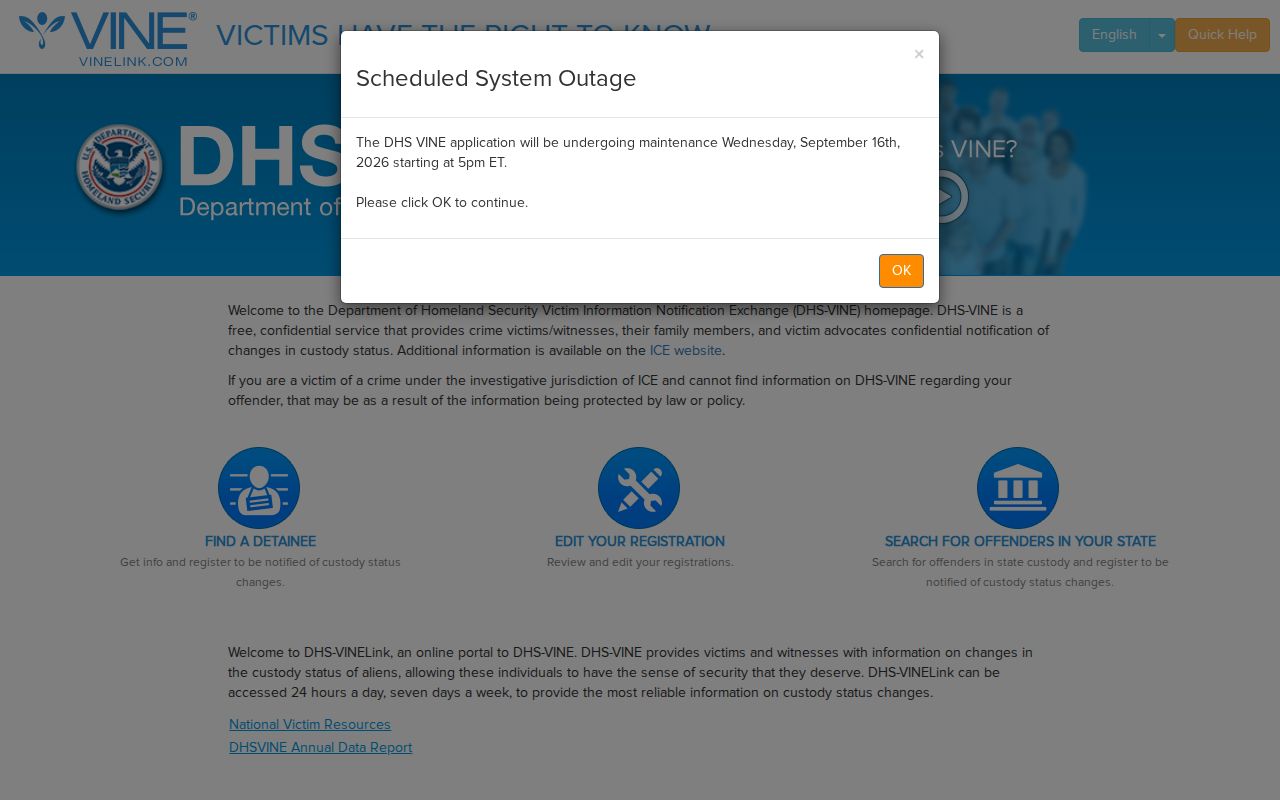
Maryland VINE stops at the state line. Federal custody runs on other tools. The Bureau of Prisons locator covers federal sentences. ICE's Online Detainee Locator covers qualifying immigration detention. DHS-VINE is a separate federal immigration notification service, as the DHS-VINE site makes plain. Someone missing from Maryland VINE may simply be sitting in a federal system with its own search rules.
A VINE match tells you where a person is held and at what custody stage. It says nothing about how a case ends. Case details live with the court.
No Howard VINE Match
Start with spelling variants, and make sure Maryland is selected. Use the offender number if you have one. A name-only search can return several matches or none. Never pick a record because the name looks close. Weigh every identifier the screen offers, and note the listed facility. A very fresh arrest may need a call to Central Booking, since each system updates on its own schedule. Released people can drop off the current-custody list while police reports and court dockets remain. Juvenile, sealed, and expunged records stay restricted. A blank screen answers nothing about the arrest itself. For a court case, go to Maryland Case Search. For a booking record or photograph, use the county PIA route; for state-sentenced custody, use the DPSCS locator. Matching the source to the custody stage beats repeating the same VINE search.
Howard VINE Notification Events
VINE in Maryland sends alerts for several kinds of custody events. Release is one. So are transfer, escape, and a return to custody. The program may also flag other changes, though exactly what arrives depends on the agency and the record. A transfer alert does not mean freedom. It often signals a move to a different facility or authority. Read the whole message. Then use the callback number or facility information the official service supplies.
Automated calls keep coming until you confirm with your PIN, which is why registration asks for that code. Email and text can lag. Carriers sometimes filter or delay them. Maryland DPSCS warns against relying on VINE alone, so anyone with safety concerns should keep a personal plan and contact victim services or law enforcement directly.
VINE Is Not Howard Booking
Two different systems touch every Howard County arrest. Central Booking builds the intake record. That record covers fingerprints, photographs, and processing done before the first commissioner hearing. VINELink only presents custody data for search and alerts. Linking to it does not make it the custodian of the full HCDC booking file.
A commissioner hearing deals with early release or detention. Everything after that belongs to the courts. Bond can change, and later hearings set the final outcome. It is a custody tool, not a court record. Maryland Case Search and the local court hold those facts.
Need a copy of the booking record? Send a precise Maryland PIA request to Howard County. Include the name, the date range, the arresting agency, the facility, and the type of record wanted. If some details are protected, ask the custodian to identify what portion is public.
Custody can be brief. One person is booked, sees a commissioner, and walks out while the police report is still being written. Another stays at HCDC before trial. A third moves into a state prison after sentencing. So one name can appear, vanish, or shift between systems without any error in the process.
Note the date and time of each check. When an alert arrives, read the full event and facility details before acting. Release, transfer, and escape are different things. If a message is unclear, call the agency number shown in the record. A forwarded alert or old screenshot proves nothing about status right now.
Registration helps victims, relatives, and anyone needing fast word of a custody change. It grants no sealed records. Keep phone numbers, email addresses, and safety plans off the public search page, and use only the official interface for the PIN.